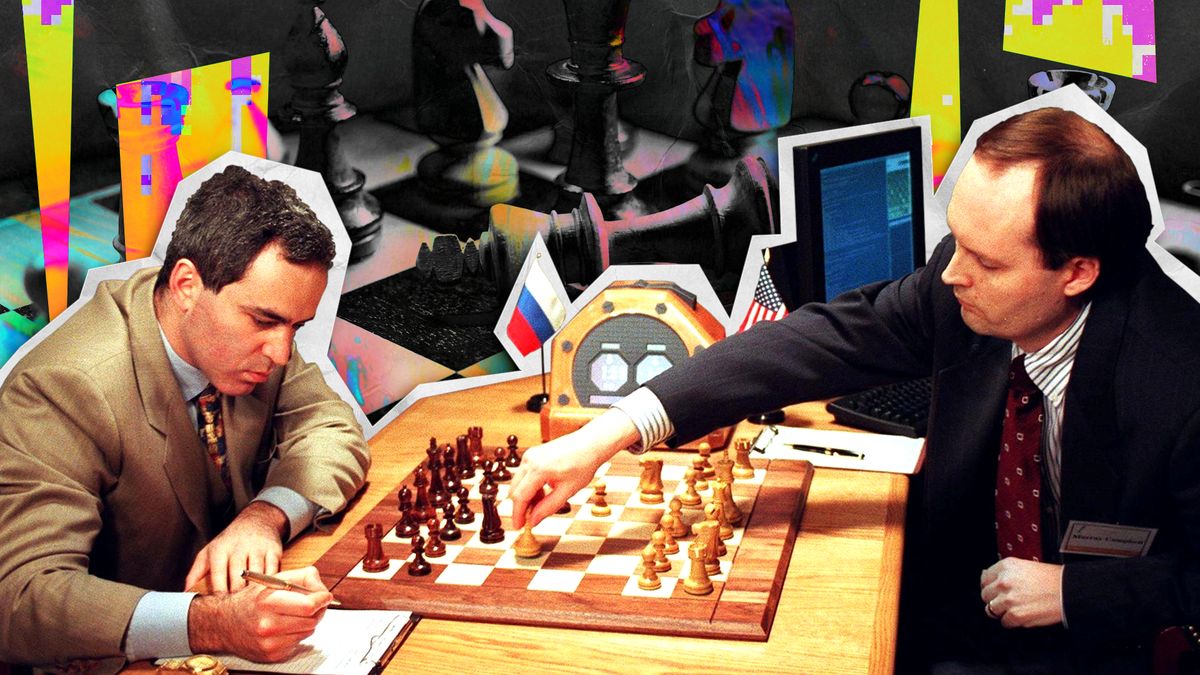
On February 10, 1996, the world witnessed a historic moment in the development of artificial intelligence (AI). Deep Blue, IBM's chess supercomputer, defeated world chess champion Garry Kasparov in a single game in Philadelphia. Although Kasparov ultimately won the match series 4-2, Deep Blue's victory in the first game marked a monumental milestone—the first time a machine beat a world chess champion in an official tournament setting.
Capable of evaluating up to 200 million chess positions per second, Deep Blue showcased AI's extraordinary potential in solving complex problems. This victory was not just about chess; it was a symbol of technology's emerging dominance over human abilities in a domain long thought to require high-level intuition and creativity.
Kasparov, regarded as one of the greatest chess players of all time, initially underestimated Deep Blue. The loss left him both amazed and concerned about AI's future. In later interviews, he called it "the dawn of a new era."
Deep Blue's triumph inspired the evolution of modern AI. From virtual assistants to self-driving cars, its legacy endures. Twenty-eight years ago, a machine proved that human limits could be challenged—and the world has never been the same.
 Loading


Disclaimer
- All content on this website, including but not limited to text, images, and videos, is not owned directly by us.
- All content on this site, whether text, images, or videos, originates from external sources or User - Generated Content (UGS).
- We are not liable for any loss or damage resulting from the content on this website.
Comments
Leave your comment (spam and offensive messages will be removed)