Intact Dinosaur Fossil Discovered! Skin, Spines, and Even Claws Perfectly Preserved
The world of paleontology has been rocked by an extraordinary discovery: an almost complete dinosaur fossil with perfectly preserved skin, spines, and even claws. The fossil was unearthed in the Hell Creek Formation, North Dakota, United States, and announced by a research team from the North Dakota Museum of Natural History during a press conference yesterday. This find is not just dry bones but a true "dinosaur mummy" that offers a vivid glimpse into prehistoric creatures from millions of years ago.
Rare Species: Edmontosaurus with "Mummified Skin"
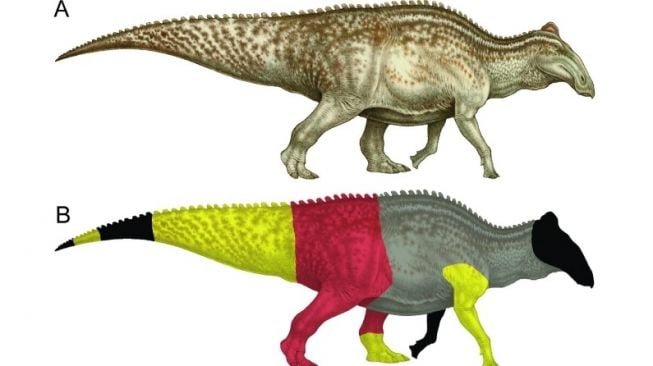
The fossil belongs to a specimen of Edmontosaurus annectens, a duck-billed herbivorous dinosaur that lived approximately 66–68 million years ago during the late Cretaceous period. It measured up to 9 meters in length and weighed an estimated 3–4 tons when alive. What makes it extraordinary is the layer of skin adhering to the skeleton, including fine scales, small dorsal spines, and intact toenails—features rarely preserved, as fossilization typically leaves only bones.
Dr. Emily Hargrove, the lead paleontologist on the discovery team, explained: "It's like finding a snapshot from the past. The skin shows a scale pattern similar to modern crocodile hide, with rough texture on the back for protection. The small spines along the backbone may have served as social displays or for thermoregulation."
This discovery is comparable to previous "dinosaur mummies" such as Dakota (an Edmontosaurus) in 2007 or Leonardo (a Brachylophosaurus) in 2000, but this one is more complete. Approximately 70–80% of the body surface is covered with original organic material, not replacement minerals.
How Was This Fossil Preserved So Perfectly?
This type of perfect preservation is known as natural mummification. According to researchers, the dinosaur died on the banks of a flood-prone river and was rapidly buried by fine sediment. Anaerobic (oxygen-free) conditions prevented bacterial decay, while mineral-rich groundwater helped "preserve" the soft tissues.
Stage 1: Sudden death, possibly due to flooding or a landslide.
Stage 2: Partial desiccation of the body before burial, causing the skin to shrink but remain attached to the bones.
Stage 3: Slow mineralization replacing water in cells, creating a nearly perfect 3D cast.
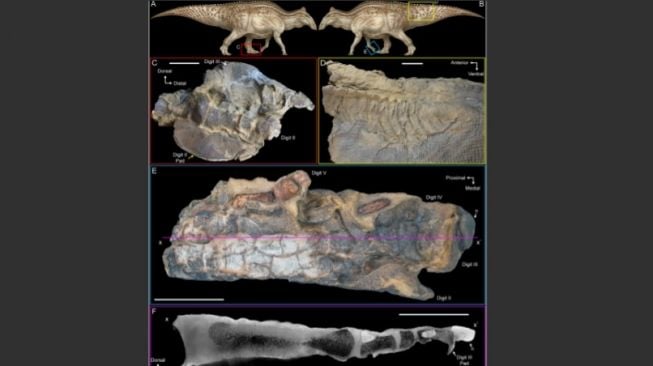
CT scans reveal traces of muscle and possibly internal organs that have fossilized. The team also found evidence of ancient microbes that aided the process—evidence of bacterial symbiosis dating back to the Mesozoic era.
Global Reaction and the Future
The global scientific community has reacted with enthusiasm. Prof. Xu Xing from the Chinese Academy of Sciences called it a "treasure" comparable to the feathered Yutyrannus fossils in China. Meanwhile, social media is buzzing with "dinosaur mummy" memes and speculation about a new Jurassic Park film.
Researchers plan to attempt DNA extraction, though the chances are slim due to time-induced degradation. However, detected collagen proteins could reveal more accurate phylogenetic relationships.
 Loading


Disclaimer
- All content on this website, including but not limited to text, images, and videos, is not owned directly by us.
- All content on this site, whether text, images, or videos, originates from external sources or User - Generated Content (UGS).
- We are not liable for any loss or damage resulting from the content on this website.
Comments
Leave your comment (spam and offensive messages will be removed)