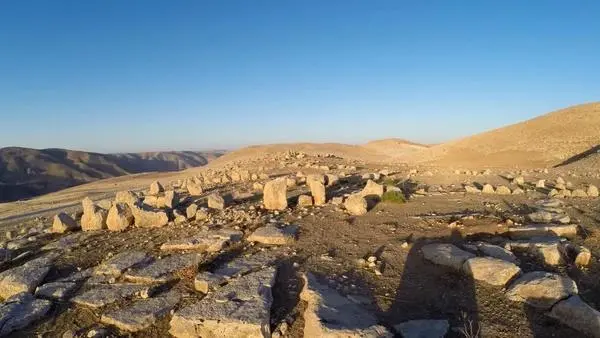
Mystery of Ancient Jordanian Civilization Uncovered: Stone Burial Site Reveals 5,000-Year-Old Feast Rituals!
A stunning archaeological discovery in Southern Jordan has opened a new window into the social life of past civilizations. At the ancient site called Murayghat, researchers found strong evidence that Early Bronze Age societies (around 3,500 BCE) frequently held large ritual feasts in the burial area!
Parties at the Cemetery?
Thousands of years ago, this area was filled with monumental stone structures called dolmens—resembling giant stone tables—which served as communal memorial monuments. Recent findings indicate that the site was not just a quiet final resting place, but a vibrant center of social and ceremonial activity.
Evidence of Stone Age "Feasting":
What is the proof? Archaeologists discovered:
• Giant Vessels: Large ceramic bowls and containers capable of holding up to 25 liters of liquid were found, indicating the preparation of significant amounts of food and drink for many people.
• Ancient Cooking Tools: The presence of grinding stones and flint tools strengthens the suspicion that food was processed right at the ceremony site.
• Meat Remains: Animal bones and horn cores were also found, pointing to significant meat consumption during these events.
Why Did They Feast There?
Researchers hypothesize that these "funeral feast" rituals had a crucial social function. In an era fraught with environmental and social instability, such communal gatherings served to strengthen bonds among community members, claim territory, and maintain their cultural identity.
This discovery changes our view of prehistoric societies, showing that they used ceremonial events, including shared eating and drinking, as an important tool for maintaining the cohesion of their community amidst the challenges of the time.
 Loading


Disclaimer
- All content on this website, including but not limited to text, images, and videos, is not owned directly by us.
- All content on this site, whether text, images, or videos, originates from external sources or User - Generated Content (UGS).
- We are not liable for any loss or damage resulting from the content on this website.
Comments
Leave your comment (spam and offensive messages will be removed)