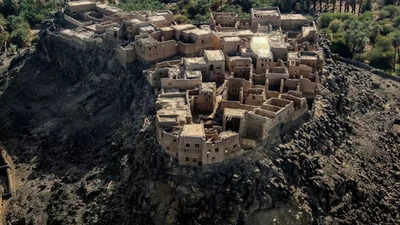
In late October 2024, archaeologists announced the sensational discovery of a 4,000-year-old ancient city hidden within the Khaybar oasis in northwestern Saudi Arabia. Named Al-Natah, this city was found in the midst of a barren desert long thought to be inhabited only by nomadic societies. The discovery reveals a process of "slow urbanism," transitioning from nomadic life to permanent settlements, challenging assumptions that the region was merely a desolate expanse devoid of advanced civilization.
Background of the Discovery
The research was led by French archaeologist Guillaume Charloux from the Centre National de la Recherche Scientifique (CNRS), in collaboration with a Saudi-French team. Excavations began about 15 years ago following the discovery of a Bronze Age fortress in the Tayma oasis, north of Khaybar. The latest study, published in the journal PLOS One in early 2024, utilized satellite imagery and field excavations to uncover the site. Al-Natah is located in the walled Khaybar oasis, a fertile "green spot" surrounded by the vast Arabian desert.
According to Charloux, the initial discovery of the Tayma fortress prompted the team to investigate the Khaybar oasis more closely. "This was the first significant find that led scientists to examine this oasis in greater detail," he told the French news agency AFP.
Key Facts about Al-Natah
Size and Structure: The city is surrounded by a 14.5-kilometer-long defensive wall, making it one of the largest fortresses in the region. 3D reconstructions reveal an organized city layout, including residential areas and a necropolis.
Artifacts Found:
- Metal weapons such as axes and daggers from the Bronze Age.
- Precious stones like agate.
- Human skeletons holding ceramic cups, indicating burial rituals.
Significance: Al-Natah demonstrates that the local society was advanced, with a complex social network despite the city’s smaller scale compared to Mesopotamian or Egyptian cities. It proves the existence of an alternative urbanization pathway in the desert, where oases served as centers of trade and agriculture.
Impact and Reactions
The discovery has been hailed as evidence that ancient Arabia was not just a "barren desert" but home to thriving civilizations. The study highlights a "slow urbanism" process over thousands of years, where societies shifted from nomadic villages to walled cities. Currently, the site is a focus of preservation efforts, with potential to become an archaeological tourism destination like Madain Saleh.
 Loading


Disclaimer
- All content on this website, including but not limited to text, images, and videos, is not owned directly by us.
- All content on this site, whether text, images, or videos, originates from external sources or User - Generated Content (UGS).
- We are not liable for any loss or damage resulting from the content on this website.
Comments
Leave your comment (spam and offensive messages will be removed)